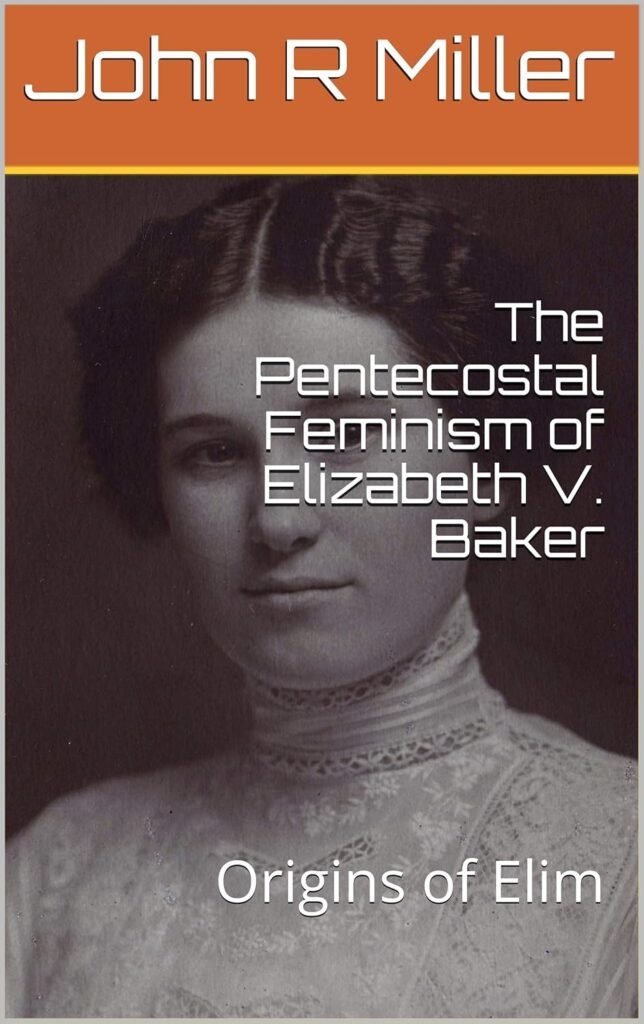
Elizabeth Victoria Baker—known throughout her ministry as Elizabeth V. Baker—occupies a distinctive but often overlooked place in the landscape of American religious history. Born Elizabeth Victoria Duncan in 1849, she emerged from the Methodist tradition into a wider world of holiness teaching, divine healing, missionary zeal, and early Pentecostal spirituality. Her story is one of perseverance through hardship, sustained devotion, and an unwavering commitment to the spiritual uplift of others. Though far from the most public figure of her era, her influence on the formation of early Pentecostalism and related revival movements was significant and enduring.
Early Life and Spiritual Formation
Baker was the eldest daughter of the Methodist minister James Duncan and his wife Mary J. Burke Duncan, both of whom played formative roles in shaping her early faith. Growing up within a minister’s household afforded her a deep familiarity with Christian doctrine and practice, but her spiritual journey was anything but conventional.
In her late teens, she entered a marriage that soon proved unhappy and abusive. The union ended in divorce, a deeply stigmatized outcome in the nineteenth century and one that left a lasting emotional mark. A second marriage, this time to a respected medical doctor, likewise proved troubled. As Baker grew increasingly committed to the spiritual disciplines of faith healing and complete dependence on God, her husband’s scientific worldview conflicted sharply with her own. Their eventual separation freed her to follow the course that would define her life’s work.
A pivotal spiritual awakening came during her attendance at a lecture on the emerging Women’s Crusade—a major force in early temperance activism. Though she had gone reluctantly, Baker later recounted experiencing a profound inner transformation as she heard of Christian women praying in saloons filled with sawdust. She saw, in their willingness, an embodiment of Christ’s power to elevate individuals beyond their natural limitations. This intuition widened her vision of what a life of faith could be.
A Personal Encounter with Healing
In the early 1880s, Baker suffered a painful and debilitating throat condition. Conventional medical treatments brought little relief. When a believer who practiced faith healing prayed for her, she experienced an unexpected and dramatic recovery. For Baker, the episode was unmistakable evidence of God’s intervention. It also provided a theological anchor for what would become a central tenet of her ministry: that divine healing was not a relic of apostolic times but a continuing promise for all believers willing to trust God.
Her subsequent reading further confirmed these convictions. Writers such as George Müller, known for his faith-based orphanages, and Adoniram Judson Gordon, a leading advocate of healing prayer and premillennial hope, exerted deep influence. Baker and her sisters—Susan A. Duncan and Harriet M. (“Hattie”) Duncan—soon resolved to build a ministry grounded in holiness, healing, Spirit empowerment, and absolute reliance on divine provision.
Founding the Elim Faith Home
In 1895, the Duncan sisters established what they called the Elim Faith Home, a place where those needing physical healing, spiritual renewal, or simple rest could retreat into an atmosphere of prayer and trust. Located in Rochester, New York, the home operated without an endowment or fixed financial backing. Instead, it embraced the “faith work” model: the belief that God would supply all needs through unsolicited gifts.
The Faith Home quickly became known for its atmosphere of fervent prayer, testimonies of healing, and its unconventional leadership—three unmarried women of deep conviction who demonstrated an unusual blend of discipline, gentleness, and boldness. Ministers, missionaries, and ordinary Christians traveled from across the nation to spend time there.
Expansion of the Work: Publishing, Education, and Missions
The ministry expanded rapidly. In 1902, the sisters began publishing a periodical titled Trust, which soon became the voice of their developing movement. Through articles, testimonies, and devotional reflections—many written or edited by Elizabeth herself—the magazine championed salvation, holiness, divine healing, Spirit baptism, and worldwide missions.
By 1906, they had founded the Elim Tabernacle, followed soon after by the Rochester Bible Training School. This school offered instruction to aspiring ministers and missionaries who lacked access to more traditional theological education. The Duncan sisters’ combination of practical training and spiritual formation produced graduates who would later contribute significantly to the developing Pentecostal movement.
Elizabeth’s missionary spirit was further strengthened during her 1898 trip to India, where she met the renowned educator and reformer Pandita Ramabai at the Mukti Mission. The visit profoundly affected her; she returned with renewed passion for global evangelism. By 1915, the sisters’ efforts had raised the equivalent of tens of thousands of dollars for foreign mission initiatives—a remarkable achievement for a faith-based organization led by women in that era.
Embrace of Pentecostal Experience
News of the Azusa Street Revival in Los Angeles soon reached the East Coast, stirring questions about the nature of Spirit baptism and the validity of accompanying spiritual gifts. Elizabeth Baker and her sisters studied the matter with care, ultimately concluding that the Pentecostal teaching on the baptism of the Holy Spirit—with its emphasis on empowerment for service—was consistent with Scripture and with their own experiences.
In 1907, their summer convention witnessed what many described as a dramatic outpouring of the Holy Spirit: worshippers experienced speaking and singing in tongues, heightened spiritual fervor, and a renewed sense of divine calling. Baker viewed these events as signs of the promised “Latter Rain”—a final spiritual harvest preceding Christ’s return. This placed her and her ministry firmly within the earliest wave of American Pentecostalism.
Writings and Last Years
Baker’s best-known work, Chronicles of a Faith Life (1915), was published shortly before her death. Blending autobiography with theological reflection, the book recounts her spiritual journey, the founding of the Elim ministries, and her convictions regarding divine healing, Spirit baptism, and missionary labor. She also wrote Baptism of the Holy Spirit and numerous articles for Trust, many of which were later gathered into devotional volumes.
Elizabeth V. Baker died on January 18, 1915, at the age of sixty-six. Her sisters continued the ministry for several years, and the students trained under her influence went on to serve as pastors, evangelists, and missionaries across the U.S. and abroad.
Legacy
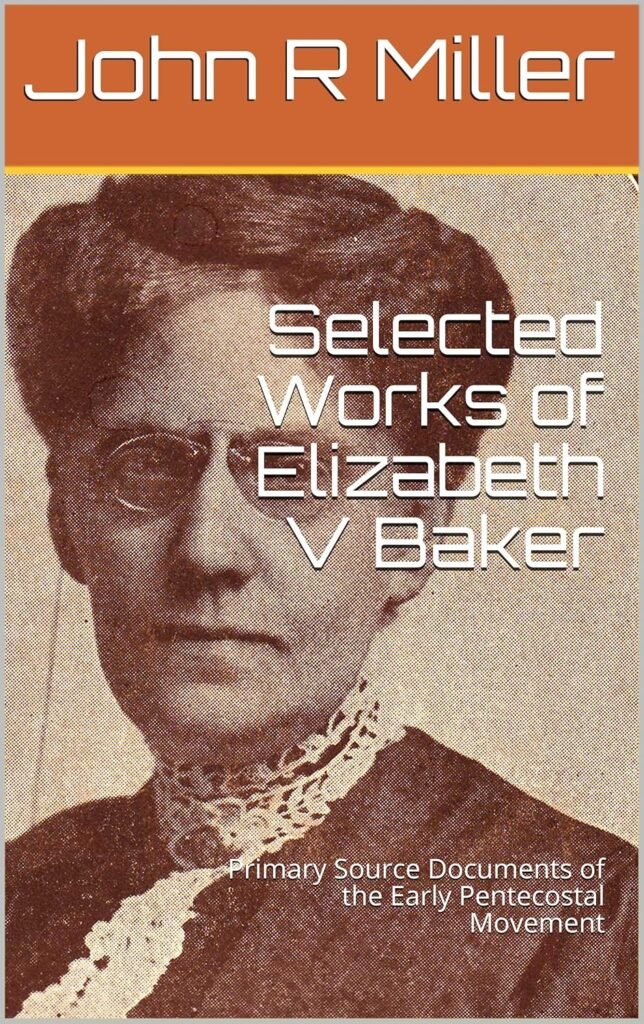
Though not as widely known as some revival leaders, Elizabeth V. Baker stands as a remarkable example of a woman who forged a spiritual path against cultural expectations. She blended theological clarity with deep compassion, personal holiness with practical ministry, and a rootedness in tradition with openness to new movements of the Spirit. The institutions she helped build, the lives she touched, and the writings she left behind constitute an enduring legacy within the broader narrative of holiness and early Pentecostal Christianity.